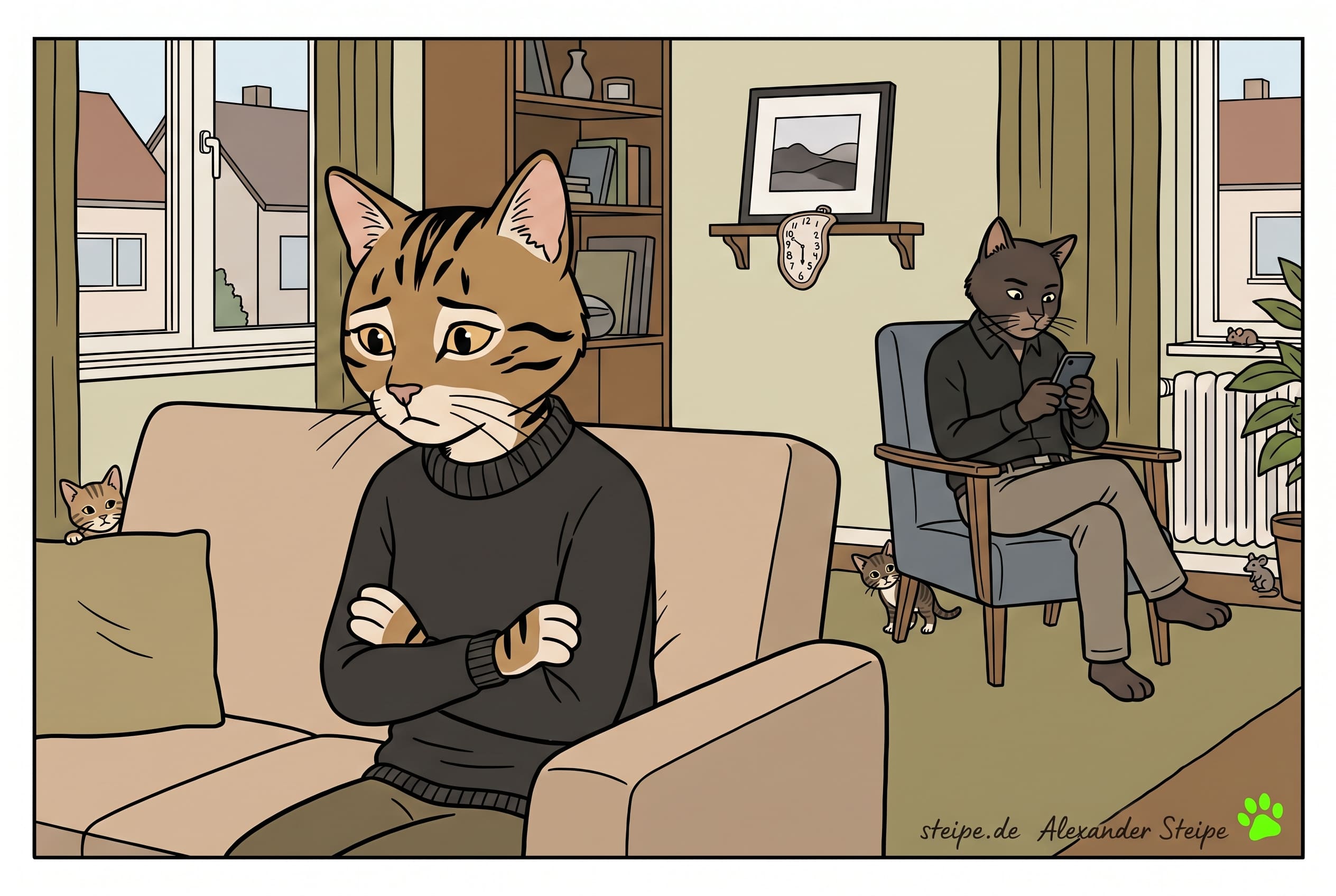
It never just "happens." The idea that infidelity strikes a relationship out of nowhere like sudden bad weather is a convenient lie. Anyone who cheats makes a choice – either deliberately or by consciously disabling their own impulse control.
1. The Biological Fault Line: When the Chemistry Fades
From an evolutionary perspective, the initial infatuation is merely a temporary biochemical state of emergency. Nature optimized the brain's reward system for reproduction, not for lifelong emotional fidelity.
- Hardwired for reproduction: Dopamine, phenylethylamine, and oxytocin serve as a potent biological glue during the early stages. Their evolutionary purpose is to secure mating and protect offspring during the most vulnerable window.
- The inevitable crash: This neurochemical high is biologically limited, typically wearing off after 18 to 36 months. Hormone levels inevitably normalize. This is not a relationship defect; it is baseline neurobiology.
- The dangerous vacuum: Once the initial rush subsides, a void appears. Those who define love exclusively through this primitive high become vulnerable. That is precisely where opportunists find an opening – and where individuals lacking self-discipline fail.
2. Lack of Impulse Control, Not Fate
No one accidentally falls into someone else's bed. Infidelity is not an act of nature, but an extended chain of micro-boundaries crossed one by one.
- Actively allowing it: Betrayal does not begin with physical intimacy. It starts with secretive chats, seeking unobserved proximity, hiding boundaries, and playing with fire. If you refuse to pull the emergency brake along this chain, you actively want the outcome.
- The alcohol excuse: Being drunk does not manufacture foreign desires; it merely suppresses inhibition. Alcohol exposes a defective self-regulation system; it does not excuse it.
- Pure selfishness: The driving force is simple entitlement – chasing a cheap dopamine hit while entirely disregarding the consequences and emotional destruction dealt to a partner. Immediate impulses are prioritized over loyalty and integrity.
Commitment is character and discipline – not a permanent chemical high. Loyalty begins where chemistry ends. (Image created with generative AI)